Local Communities as the Foundation of Campaign Activity
The congressional districts sprawl over cities, suburbs, farm country, and lakeside hamlets in Michigan. Each of these areas brings about separate concerns, and campaigns adjust themselves accordingly. Candidates do not operate in a vacuum; they react to the conversations going on in community centers, PTA meetings, and small business networks.
Community-level engagement is not just some informal guesswork. Campaigns seek input through structured meetings, surveys, and a host of public forums, keeping approval ethics on the election law as cast by the state and the relevant federal statutes into consideration. The transparency rule implies that every requirement in terms of publication of vendors' expenditures and reporting of candidates' campaign-finance activities or contributions flows naturally from the principles of voter protection and accountability in a free and fair election.
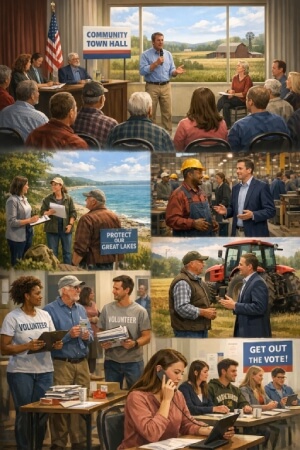
Town Halls and Public Forums
Town halls remain one of the most visible ways communities influence congressional campaigns. Candidates attend meetings organized by neighborhood associations, chambers of commerce, faith groups, and civic coalitions. Residents raise questions about healthcare access, infrastructure funding, education standards, or agricultural policy, depending on the district’s profile.
These events are more than symbolic appearances. Campaign staff often document recurring concerns and adjust messaging or policy emphasis accordingly. In manufacturing-heavy areas near Detroit, economic development and labor rights may dominate discussions. In rural districts, broadband expansion or farm policy might be central. The dialogue creates a feedback loop that helps campaigns refine their priorities while remaining within campaign finance and disclosure laws.
Community Organizations and Advocacy Groups
Nonprofit organizations and advocacy groups play a structured role in shaping campaign discourse. Environmental coalitions around the Great Lakes, veterans’ associations, small business alliances, and healthcare advocacy networks frequently host candidate questionnaires or policy briefings. Their goal is to clarify where candidates stand on specific legislative matters.
While these groups may endorse candidates or publish policy comparisons, they operate under clear legal guidelines. Campaigns must report financial relationships, and independent groups must follow rules regarding political expenditures. This regulatory environment supports transparency while allowing communities to organize around shared interests. As a result, issue-focused groups can influence public debate without undermining electoral safeguards.
Volunteer Networks and Grassroots Mobilization
Grassroots volunteers are often local residents who dedicate time to canvassing, phone banking, and event coordination. In Michigan, volunteer bases frequently reflect community identity. University students in Ann Arbor, retirees in suburban counties, and union members in industrial regions each bring different priorities and outreach styles.
Volunteer activity shapes campaign strategies in practical ways. If a campaign sees strong engagement around a particular issue, it may allocate more resources to that topic. Grassroots enthusiasm can signal which concerns resonate most deeply. At the same time, volunteer operations must follow election compliance standards, including rules about coordination, reporting, and voter contact practices, ensuring participation remains fair and transparent.
The Role of Labor, Industry, and Professional Associations
Michigan's political culture has been profoundly shaped by its economic environment ever since time immemorial. Organized labor and the manufacturing, automotive, agriculture, healthcare, and technology sectors have the policymakers they seek to influence.
These professions and trade union groups contribute to the campaigns of congresspersons who try to point out how legislative debates relate to employment, wages, trade, and innovation. Their involvement does not mean they are blindly endorsing campaign positions but they do greatly affect the ways in which candidates frame their policy proposals. Their organizations will take official positions and make statements that raise awareness amongst members and give them a very good idea of what legislative and regulatory matters are of top priority to them.
Labor Unions and Worker Advocacy
Labor unions have historically held a visible presence in Michigan’s political environment. Worker organizations engage in voter education, candidate forums, and policy advocacy related to labor rights, workplace safety, and trade policy.
Union members participate as volunteers, donors, and community organizers. Campaigns often consult labor leaders when developing positions on employment legislation or manufacturing investment. However, union involvement operates within established campaign finance rules and disclosure requirements, reinforcing legal boundaries that protect electoral integrity.
Business Associations and Economic Development Groups
Regional business associations, including local chambers of commerce, frequently host candidate events. These forums allow business owners to ask about tax policy, regulatory frameworks, infrastructure development, and workforce training programs.
Economic development groups may publish policy outlines or encourage civic engagement among members. Their influence lies in articulating how proposed legislation could affect local employment and investment. Campaigns respond by clarifying positions or adjusting communication strategies to address economic realities within specific districts.
Agricultural Communities and Rural Networks
In rural districts, farming associations and agricultural cooperatives play a central role. Farmers often engage candidates on issues such as crop insurance, environmental regulation, and export markets. Community meetings in small towns can significantly shape campaign narratives about rural resilience and land use.
Agricultural voices also highlight infrastructure needs, including transportation and digital connectivity. Campaigns that overlook rural input risk alienating key voting blocs. As with other organized participation, agricultural advocacy must comply with election law and reporting requirements, maintaining transparency for voters.
Faith Communities, Cultural Groups, and Civic Identity
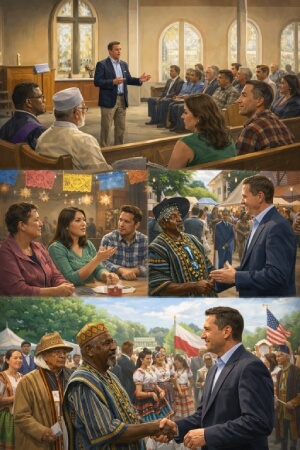
Faith-based organizations and cultural associations also contribute to the public dialogue during congressional campaigns. Michigan’s diverse population includes longstanding immigrant communities, faith congregations, and cultural networks that host public discussions on social policy and community wellbeing.
These groups often focus on values-driven issues such as healthcare access, immigration policy, or social services. While religious institutions must observe legal restrictions on direct political endorsements depending on their status, they remain important venues for civic education and voter awareness.
Faith Leaders and Community Conversations
Faith leaders may organize nonpartisan forums where candidates discuss moral and ethical dimensions of policy. Congregants often evaluate how campaign messages align with community priorities. Such conversations shape how candidates communicate sensitive topics and encourage respectful engagement.
Campaign outreach to faith communities typically centers on listening sessions rather than overt political messaging. Compliance with nonprofit and tax regulations ensures that these interactions respect boundaries between civic engagement and partisan activity.
Cultural Organizations and Local Heritage Groups
Cultural organizations representing ethnic and regional identities host community gatherings and policy discussions. In cities like Detroit and Grand Rapids, heritage festivals and civic meetings can become informal platforms for candidate engagement.
These groups often emphasize representation, language access, and community investment. Campaigns may adapt outreach materials to reflect cultural diversity and ensure inclusivity. By responding to community-specific concerns, candidates demonstrate attentiveness while remaining subject to election transparency standards.
Community Voices at the Core of Representation
Congressional campaigns in Michigan exhibit an ongoing exchange between the candidates and the respective communities they are aspiring to represent. Town halls, labor unions, business associations, universities, faith communities, and media outlets collectively work to shape the issues of campaign.
Each cadre with a separate set of concerns, these groups participate in an atmosphere of legal regulation that underscores transparency, the need for accountability, and voter rights. By understanding the ways that communities mold the campaign, we may virtualize how local elective power extends well beyond the ballot.
The Michigan public sphere is a good example to demonstrate that election campaigns are indeed more than a competition for political position and provide far more as public conversation related to policy, identity, local communities, and forward thinking.
On Tuesday, the Democrats won the Michigan State Senate for the first time since the 1982 general election. On the new citizen-drawn maps, Dems charted a course to the majority through new configrations of Lansing, Ann Arbor, the Tri-Cities & Macomb County. pic.twitter.com/UQSqgtzm57
— We Good in the North (@WWFerguson2) November 12, 2022